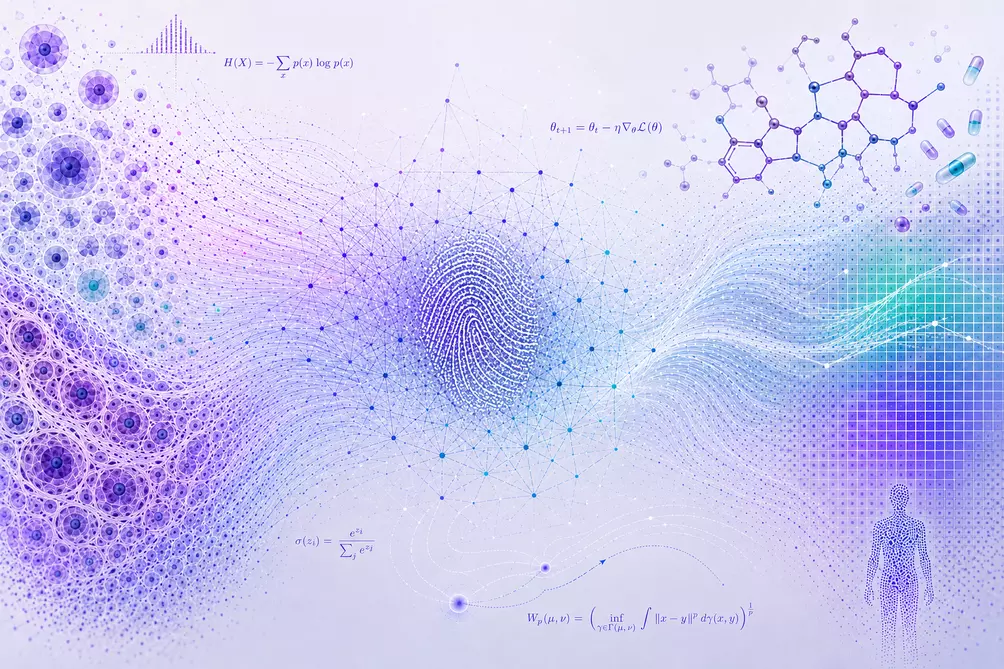
The Rapsomaniki Group develops artificial intelligence (AI) and machine learning (ML) methods for biomedicine, with the vision to transform complex biomedical data into mechanistic models of disease and to guide precision intervention across scales—from molecules and cells to tissues, patients, and therapeutic outcomes.
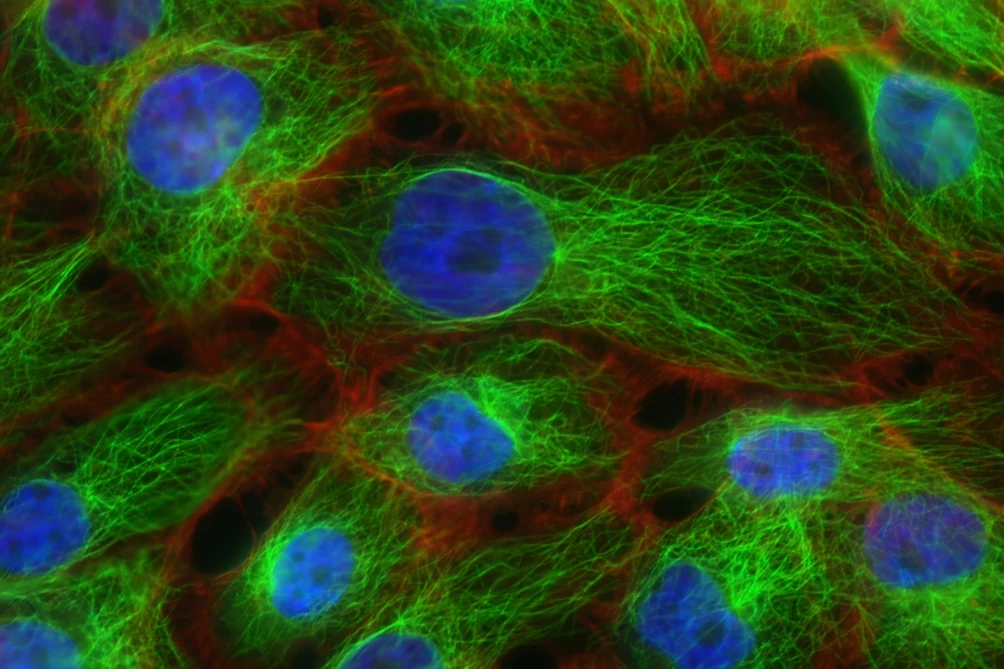
Our research is inspired by two concurrent revolutions. The first is experimental: the emergence of single-cell and spatial multi-omics, and large-scale perturbation screens that provide complementary views of biological systems in health and disease, down to individual cells and across millions of observations. The second is computational: the rapid development of new AI paradigms capable of learning from complex, multimodal and spatiotemporal data, discovering shared representations, and enabling interaction and reasoning across data modalities.
Our aim is to build AI/ML methods that integrate these diverse modalities into coherent representations, expose the biological drivers behind model predictions, and predict heterogeneous, system-level responses to interventions. Our research leverages and advances foundational AI principles, from multimodal representation learning, geometric deep learning and explainable AI to optimal transport and generative AI, with applications in cancer biology, precision oncology, and therapeutic discovery. A unifying theme across our work is the treatment of heterogeneity as a fundamental signal that encodes biological function, disease progression, and therapeutic response.
Our research is organized around three interconnected themes:
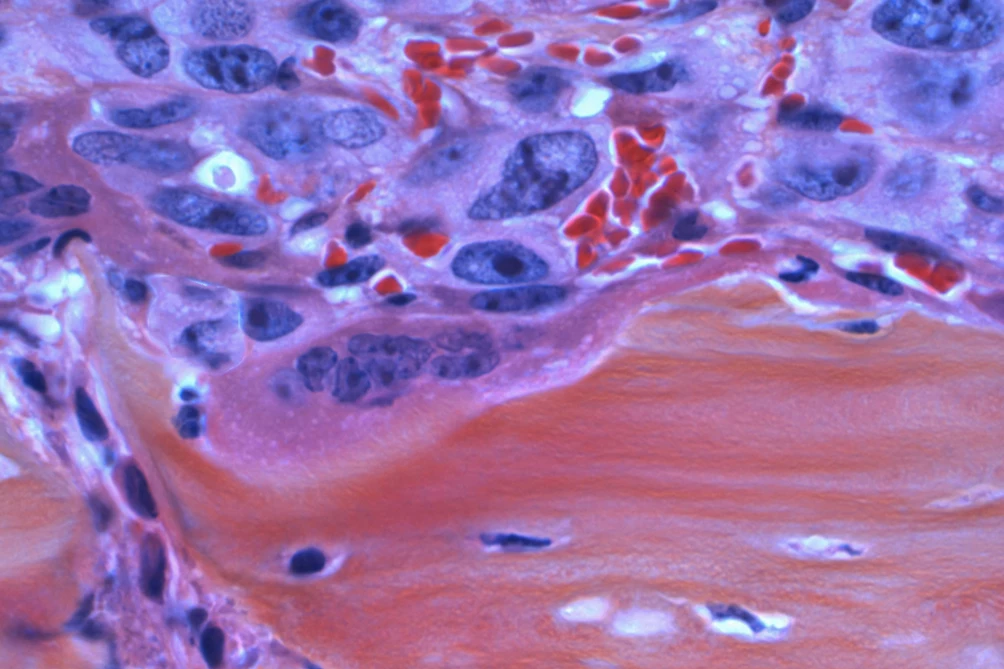
Represent: we develop models that learn unified, multimodal representations of biological systems, integrating diverse data types — from single-cell and spatial omics to histopathology imaging — so that heterogeneous cellular states, tissue morphology and spatial architecture are jointly captured. Interpret: we build explainable AI methods that uncover the biological and spatial drivers behind AI model predictions, enabling discovery of biological mechanisms, and spatial biomarkers that can be pursued for validation and therapeutic targeting. Perturb: we create predictive models that go beyond observation to simulate how biological systems respond to drug, genetic or immunotherapy perturbations, supporting virtual experimentation that accelerates hypothesis generation and therapeutic prioritization.
Together, these themes advance our long-term goal of elucidating disease mechanisms from the intra-cellular to the patient level, bridging the gap between data, AI, and precision medicine.
Our team
Marianna Rapsomaniki
Direction de l'innovation et de la recherche clinique,
Tenure track assistant professor
Isinsu Katircioglu
Direction de l'innovation et de la recherche clinique,
Senior Data Scientist
Melissa Ensmenger
Direction de l'innovation et de la recherche clinique,
PhD student
Dhruva Rajwade
Direction de l'innovation et de la recherche clinique,
Research assistant
Theo Maffei
Direction de l'innovation et de la recherche clinique,
PhD student
Caner Ercan
Direction de l'innovation et de la recherche clinique,
Postdoctoral researcher
Federica Palmisano
Direction de l'innovation et de la recherche clinique,
Doctorante
Projects
Represent
We develop models that learn unified, multimodal representations of biological systems, integrating diverse data types — from single-cell and spatial omics to histopathology imaging — so that heterogeneous cellular states, tissue morphology and spatial architecture are jointly captured.
We build explainable AI methods that uncover the biological and spatial drivers behind AI model predictions, enabling discovery of biological mechanisms, and spatial biomarkers that can be pursued for validation and therapeutic targeting.
We create predictive models that go beyond observation to simulate how biological systems respond to drug, genetic or immunotherapy perturbations, supporting virtual experimentation that accelerates hypothesis generation and therapeutic prioritization.